The OCR That Read the Page,
and the AI That Rewrote It
A single page from the 1930s Khmer Tripitaka, read by a purpose-built vision-first OCR engine and by a leading general-purpose multimodal LLM. One returned the text. The other returned a fluent, confident approximation — then invented a scholarly excuse for its errors.
01The Specimen
Historical Khmer documents are among the hardest OCR targets in existence: stacked subscript consonants, diacritics that change meaning with a single stroke, letterpress ink spread, and pre-standardization typography. They are also among the most valuable — much of Cambodia's religious, legal, and literary heritage survives only in print like this.
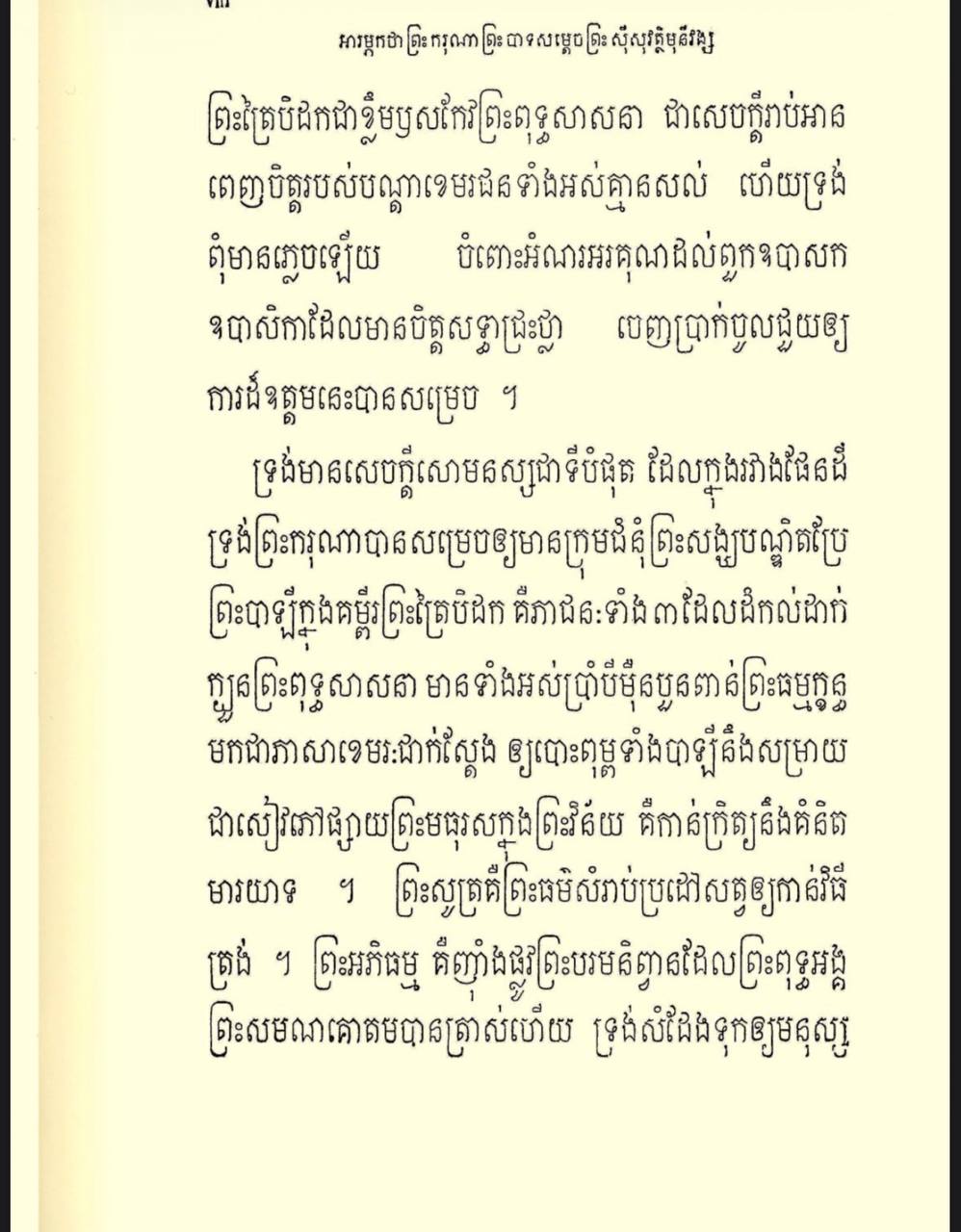
02NextOCR — Verified Transcription
NextOCR's output was checked character-by-character against the plate. No substantive recognition errors.
ព្រះត្រៃបិដកជាខ្លឹមឫសកែវព្រះពុទ្ធសាសនា ជាសេចក្ដីរាប់អាន ពេញចិត្តរបស់បណ្ដាខេមរជនទាំងអស់គ្មានសល់ ហើយទ្រង់ពុំមានភ្លេចឡើយ ចំពោះអំណរអរគុណដល់ពួកឧបាសក ឧបាសិកាដែលមានចិត្តសទ្ធាជ្រះថ្លា ចេញប្រាក់ចូលជួយឲ្យការដ៏ឧត្តមនេះបានសម្រេច ។
ទ្រង់មានសេចក្ដីសោមនស្សជាទីបំផុត ដែលក្នុងរវាងផែនដីទ្រង់ព្រះករុណាបានសម្រេចឲ្យមានក្រុមជំនុំព្រះសង្ឃបណ្ឌិតប្រែព្រះបាឡីក្នុងគម្ពីរព្រះត្រៃបិដក គឺភាជនៈទាំង៣ដែលដំកល់ដាក់ក្បួនព្រះពុទ្ធសាសនា មានទាំងអស់ប្រាំបីម៉ឺនបួនពាន់ព្រះធម្មក្ខន្ធ មកជាភាសាខេមរៈជាក់ស្ដែង ឲ្យបោះពុម្ពទាំងបាឡីនឹងសម្រាយជាសៀវភៅផ្សាយព្រះមធុរសក្នុងព្រះវិន័យ គឺកាន់ក្រិត្យនឹងគំនិតមារយាទ ។ ព្រះសូត្រគឺព្រះធម៌សំរាប់ប្រដៅសត្វឲ្យកាន់វិធីត្រង់ ។ ព្រះអភិធម្ម គឺញ៉ាំងផ្លូវព្រះបរមនិព្វានដែលព្រះពុទ្ធអង្គព្រះសមណគោតមបានត្រាស់ហើយ ទ្រង់សំដែងទុកឲ្យមនុស្ស
03The LLM's Reading, Proofed
The same page was transcribed by a leading general-purpose multimodal LLM. Its output is shown below with a proofreader's corrections: the model's misreading struck through, the verified reading beside it.
ព្រះត្រៃបិដកជាខ្លឹម
ទ្រង់មានសេចក្ដីសោមនស្សជាទីបំផុត ដែលក្នុងរវាង
04Error Anatomy
Eight substantive errors on a single page — and their pattern is more telling than their count. The LLM consistently failed on rare-but-correct vocabulary, replacing it with high-frequency lookalikes or outright non-words.
| On the page | LLM read | What went wrong |
|---|---|---|
| ឫស | ប្រសរ | "root" — rare word replaced by a hallucinated cluster |
| ចំពោះអំណរ | បំពោះអំណារ | two consecutive misreads (ច→ប, spurious ា) |
| ចូល | បួល | non-word — then rationalized as "archaic spelling" |
| ផែនដី | ដែនដី | ផ/ដ confusion; plausible word, wrong word |
| ដំកល់ | ដក់ល់ | "enshrined" — cluster broken into a non-word |
| ជាក់ស្ដែង | ដាក់ស្តែង | meaning-destroying substitution ("manifestly" lost) |
| ម៉ឺន | មឺុន | diacritic misplaced in "eighty thousand" |
| សូត្រ | ស៊ូត្រ | spurious diacritic on Sutta Piṭaka |
05The Model Defended Its Mistakes
The most consequential finding was not the error count. It was what the LLM did when its misreadings produced non-words.
Rather than flagging uncertainty, the model invented a scholarly justification: it suggested its anomalous output reflected "pre–Chuon Nath orthography," implying it had faithfully transcribed archaic spellings from the source.
The explanation was fabricated. The page contains the ordinary words ចូល and ដំកល់; the "archaic spellings" existed only in the model's output. The error became misinformation about the document itself.
This is the failure mode that makes general-purpose LLMs risky for archival and compliance-grade OCR:
1. Language priors override pixels. When the visual signal weakens, an LLM predicts the most probable text, not the actual text. Rare-but-correct words lose to frequent-but-wrong neighbors.
2. Errors arrive fluently. Hallucinated text is grammatical and confident, so it passes casual review — unlike classical OCR noise, which is visibly broken.
3. The model defends its output. A plausible meta-explanation converts a recognition error into a false claim about the source. For national-heritage digitization, that is worse than no OCR at all.
06Why NextOCR Reads It Correctly
NextOCR is built vision-first: the recognition model commits to what is physically on the page, and the language model is deliberately kept out of the character-decision loop. The architecture is informed by 30+ years of Khmer type design and font engineering — the same expertise used to draw these letterforms is used to recognize them.
On this 1930s letterpress page, that meant correct stacked subscripts, correct rare vocabulary (ឫស, ដំកល់), correct diacritic placement, and faithful preservation of the source — no "corrections," no confabulation.
See also: Case Study 1 — Vision-First vs. Traditional OCR on 1950s Khmer Texts
Test conducted July 2026 · Source scan and full outputs available on request.